
The journal
How do you do a French seam step by step?
A French seam encloses its raw edges in two passes. Plan both seam widths to fit the pattern’s total allowance, then test on a sample before sewing the garment.
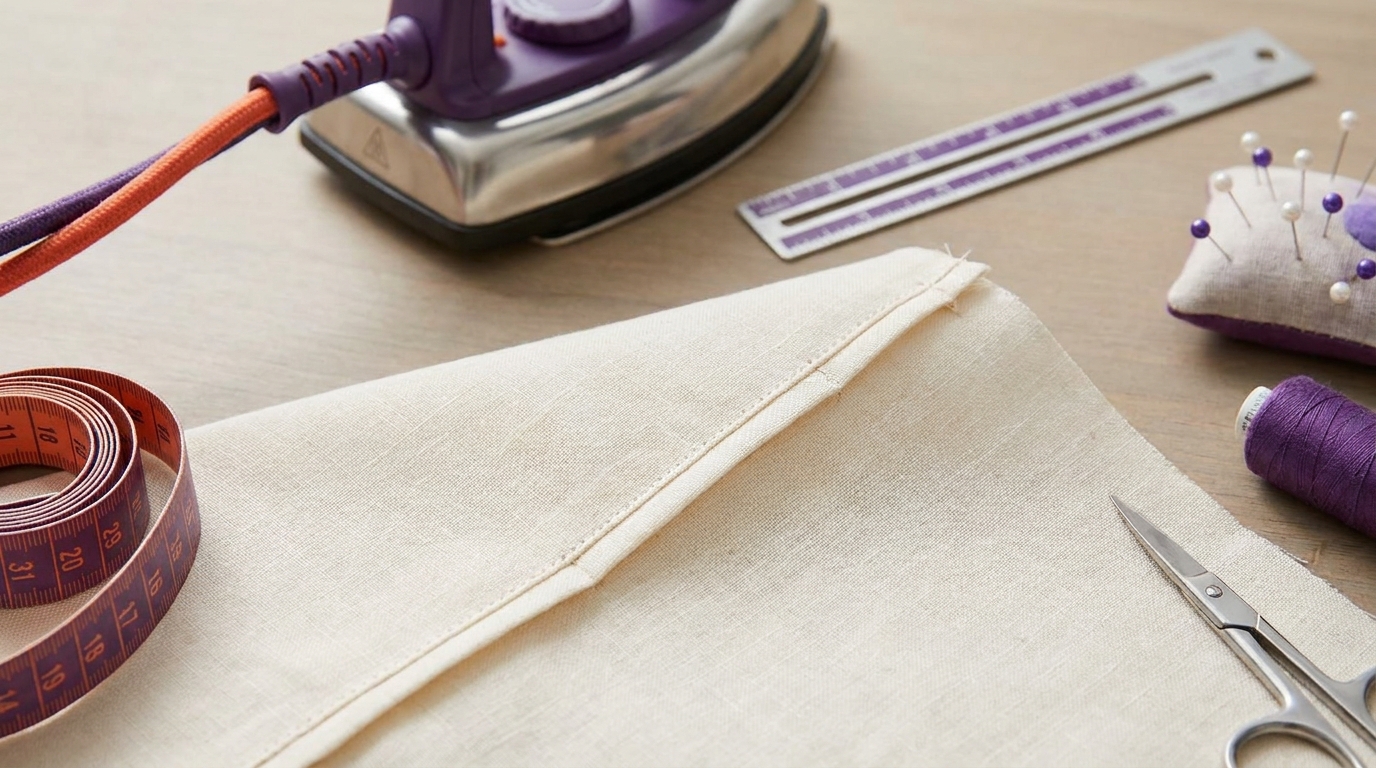
Direct answer: A French seam is sewn in two passes. First, sew the pieces wrong sides together, trim and press. Then turn the pieces right sides together and sew again to enclose the trimmed raw edges. For a common 5/8 inch total, sew the first pass at 3/8 inch, trim, then sew the second pass at 1/4 inch, and press to finish (Seamwork tutorial) (Megan Nielsen guide).
What a French seam is and when to use it
A French seam encloses raw fabric edges inside a neat, double-stitched channel. It’s ideal for lightweight and sheer fabrics where you want a delicate, durable finish and no fraying ends visible from the inside (Seamwork tutorial). Seamwork recommends it especially for lightweight to medium-weight textiles such as cotton lawn, silk, chiffon and rayon, and highlights choosing the right fabric and pressing to avoid bulk (Seamwork workshop overview).
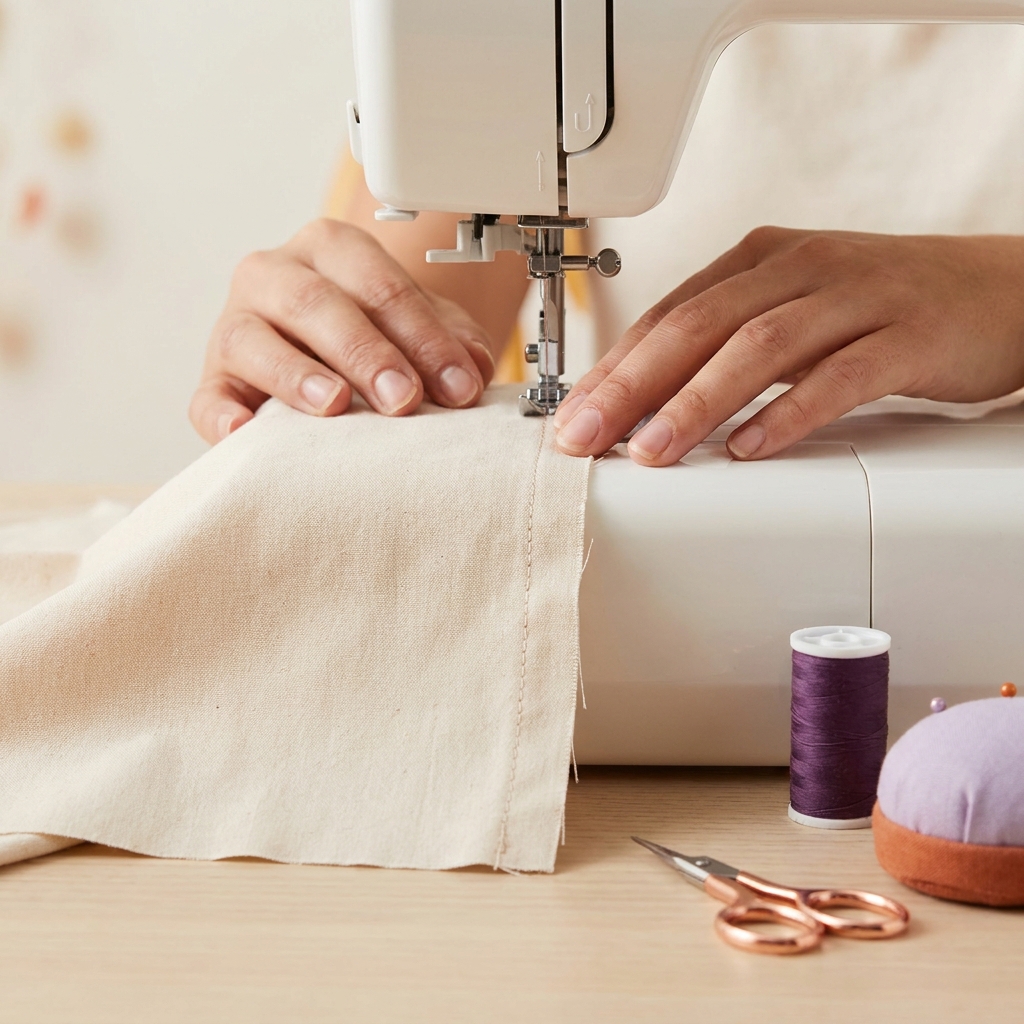
Step-by-step: basic French seam (5/8 inch total)
- Align and sew wrong sides together. Place fabric pieces with wrong sides facing. Stitch a straight seam at 3/8 inch from the raw edge. This is the first pass that will be hidden later (Seamwork tutorial).
- Trim. Carefully trim the seam allowance to about 1/8 inch to remove frays and reduce bulk (Seamwork tutorial).
- Press. Press the tiny seam allowance to one side, then fold the fabric so right sides are together, rolling the seam to the very edge for a crisp fold. Press again to set the fold (Seamwork tutorial).
- Sew the enclosing pass. Stitch along the folded edge at 1/4 inch, which encloses the trimmed allowance fully (Seamwork tutorial). With 3/8 inch + 1/4 inch, your total seam equals the common 5/8 inch allowance (Megan Nielsen guide).
- Final press. Press the finished seam to one side for a smooth result (Seamwork tutorial).
Alternate narrow French seam for very fine fabrics
If your fabric is extra sheer or frays easily, use a narrower inside profile while keeping the same total. Sew the first pass at 1/2 inch, trim to a scant 1/8 inch, press and turn, then sew the second pass at 1/8 inch. This also yields a 5/8 inch total seam but creates a very dainty inner fold for sheers (Seamwork overlay tutorial: narrow French seam).
Curves and tricky areas
- Curves: Keep the seam allowance narrow and press with a tailor’s ham to shape the curve cleanly. Practice on scraps to dial in the width before sewing your garment (Seamwork workshop overview).
- Set-in sleeves and pockets: It’s possible to French seam these with careful pinning, trimming and pressing; evaluate bulk and switch to a mock French seam when needed (Seamwork workshop overview).
Sizing your seam allowances
Match the two passes to your pattern’s seam allowance. For example, for a 5/8 inch allowance you can use 3/8 inch + 1/4 inch (Seamwork tutorial) or 1/2 inch + 1/8 inch for a narrower inner fold (Seamwork overlay tutorial). Megan Nielsen also demonstrates 3/8 inch then 1/4 inch for a standard 5/8 inch total (Megan Nielsen guide).
Quick tips and troubleshooting
- Raw threads showing? Trim the first seam closer (about 1/8 inch) before the second pass so all threads are enclosed (Seamwork tutorial).
- Puckering on delicate fabrics? Use a fine, sharp needle (size 60/8-70/10) and press thoroughly between passes; these are standard practices when working with sheers (Seamwork overlay tutorial). Keep the French seam narrow on very light fabrics (Seamwork workshop overview).
- Too much bulk? French seams suit light to medium weights best. If your fabric or seam intersection feels thick, consider a mock French seam or another finish (Seamwork workshop overview).
Put this into practice
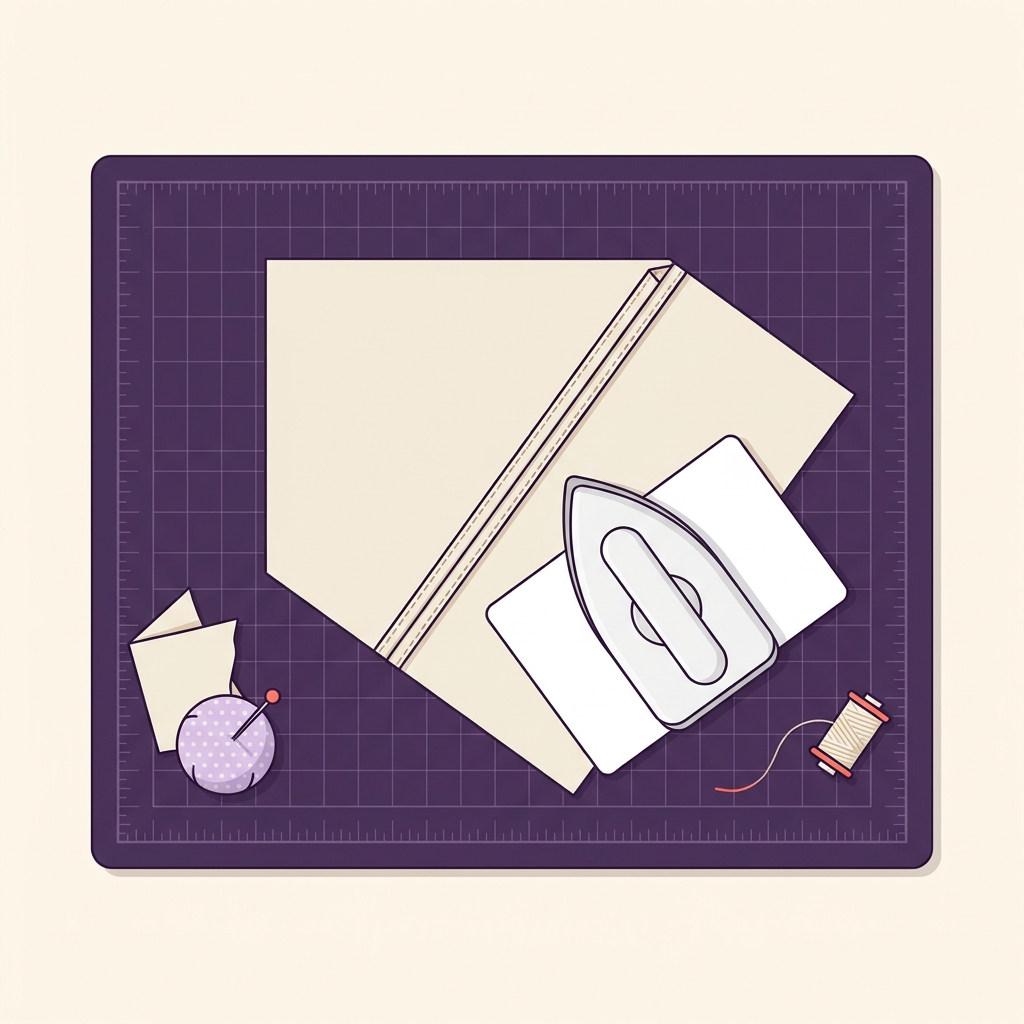
Mark the total seam allowance and make a scrap sample first. Inspect the enclosed edge and finished width before repeating the seam on the garment, so the second stitching line does not quietly change the planned fit.
French seam mini‑checklist
Related reading on Made in Steps
- What is the standard seam allowance for sewing?
- Should a pressing cloth be wet or dry? Fabric-by-fabric guidance
FAQ
Can I use French seams on armholes? Yes. With careful easing and pressing, you can French seam set‑in sleeves; assess bulk and switch to a mock French seam if needed (Seamwork workshop overview).
Which fabrics are best? Lightweight to medium-weight fabrics like cotton lawn, silk, chiffon and rayon work well for French seams (Seamwork workshop overview).

For a pillowcase project, Talk About Sleep explains closure choices. Decide the closure and finished measurements before applying an enclosed seam to the construction. What are the different types of pillowcase closures?.
Optional equipment for this guide
If cutting tools need replacing, compare the cutter and a suitable cutting mat together. You can practise the seam with the tools you already use safely.
As an Amazon Associate I earn from qualifying purchases. These are researched options, not hands-on test results. Check the exact size or model, current price and availability on Amazon.
| Product option | Fit and limits to check | Retailer |
|---|---|---|
| Product imageOLFA RTY-2/DX 45 mm rotary cutter | A rotary cutter for fabric cutting on a suitable mat. Keep the blade guarded between cuts and choose a grip that feels secure. | View on Amazon |
| Product imageFiskars 18 × 24-inch cutting mat, Gray | A reusable cutting surface for fabric and craft layouts. Check your table space and store it flat away from heat. | View on Amazon |