
Good things
start with
“what if?”
Make a card. Personalize a tote. Sew a cushion cover.
A little creative time, one craft at a time.
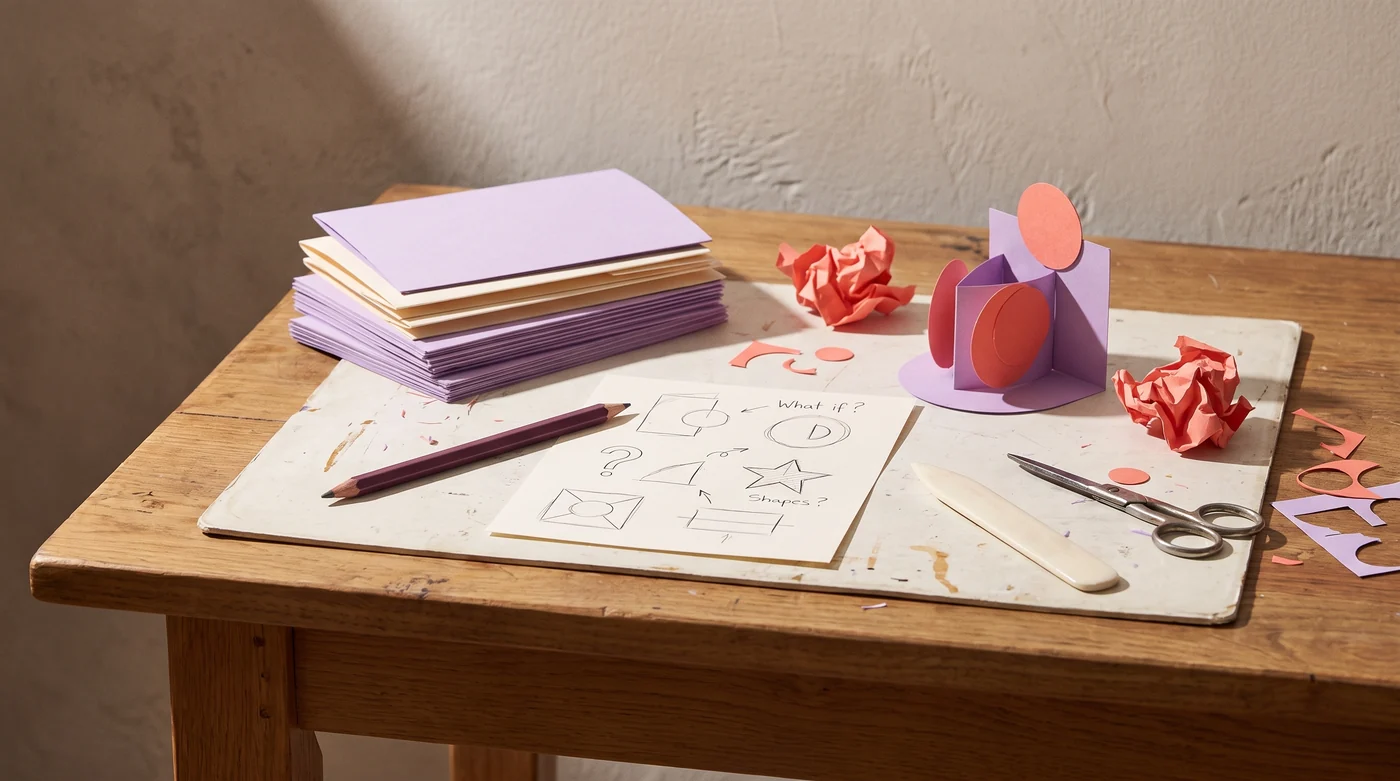
Learn from the scraps.
What are you
in the mood to make?
Follow the project.
Keep the useful details.
Personalize
a fabric tote.
Material, pressure, peel method.
Open the project →PAPER / CARDS02A folded card.
A personal touch.
Paper weight, folds and clean cuts.
Read the note →SEWING / FIRST STITCHES03Sew your first
cushion cover.
Fabric, seams and a simple closure.
Explore the guide →Make room for the making.
Watch the cut edge move around a seam line, or unfold a card into its two panels.
200 × 150 mm between seam lines, with 10 mm added on every edge.
Proportions are to scale within the diagram. The screen is not a physical-size template. Geometry only: no hems, closures, thickness, fit or machine margins are included.
Craft Materials & Techniques Library
Choose the object you want to make, then match the material, process and practice sample.
Explore the reference ↗The subject, in useful detail.
We help people make personal objects and gifts through paper, vinyl, heat transfer and carefully developed craft projects.
Paper crafts & cards
Start with the folded or cut object you want to make. Paper thickness, grain, finish and the intended process belong in the plan.
Open this guide ↗Explore the subjectAdhesive vinyl
Match the vinyl to the surface and intended use before committing a design. Transfer materials and application instructions are product-specific.
Open this guide ↗Explore the subjectHeat-transfer gifts
The blank, transfer material and heat source form one process. Keep their exact instructions together.
Open this guide ↗Explore the subjectBeginner sewing
Build confidence with a readable pattern, suitable fabric and a practice seam. Keep cut size, seam lines and material direction distinct.
Open this guide ↗Explore the subjectEmbroidery & stitch
A stitch project starts with fabric, thread and the design scale. Keep the method small enough to inspect and repeat.
Open this guide ↗Explore the subjectCraft machines & supplies
Choose a machine around the projects and materials it can actually handle. Verify compatibility for the exact model and accessory.
Open this guide ↗A little more to work with.
Make the practice piece part of the project
A small sample is an item on the materials list, not an inconvenience after the sheet runs short.
Read the note ↗A practical reading noteAdhesive vinyl or iron-on: start with the object
The project’s surface and use come before the choice of transfer process.
Read the note ↗A practical reading noteFit a project onto the sheet you actually have
The usable sheet can be smaller than the material you bought.
Read the note ↗A practical reading noteCut size and seam lines: draw both
A rectangle can have two useful sizes. Label the one the pattern means before adding an allowance.
Read the note ↗A practical reading noteGive a stitch sample its own notebook page
One small study can tell you more when the materials, method and observation stay together.
Read the note ↗A practical reading noteWork backward from the closed card
Decide what arrives in the envelope, then draw the blank that opens into it.
Read the note ↗