
The journal
Is knitting an expensive hobby?
Knitting costs depend on project size, yarn, tools and local prices. Start with a small project and use a simple quantity-and-cost calculation before buying supplies.
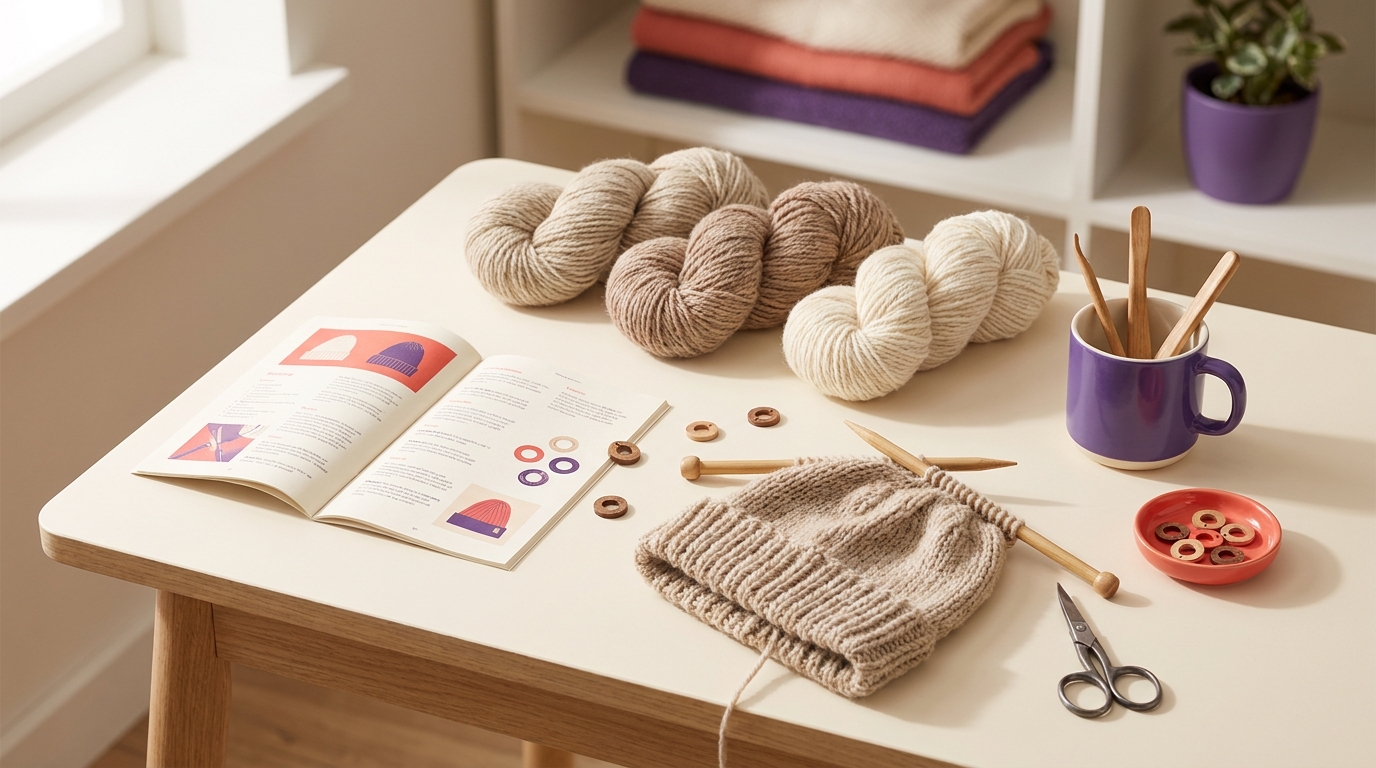
Short answer: it doesn’t have to be. You can begin knitting with one pair of budget needles, a single skein, and a free pattern, then add tools only as you need them. The total depends on the project’s yarn quantity, the tools you already have and your local prices. A small practice swatch needs much less yarn than a garment.
What actually costs money in knitting?
• Needles: You’ll find several materials at different price points. Compare the actual prices of suitable plastic, bamboo, wood and metal needles rather than assuming one material is always cheapest. If you can borrow a suitable pair, that may avoid an initial purchase (Yarnspirations: How to Knit guide).
• Yarn: Choose by weight and care needs. Medium weight, labelled 4 in the Craft Yarn Council system, is one beginner-friendly option; match the actual pattern rather than treating worsted and Aran as identical in every yarn range (Yarnspirations: How to Knit guide). The ball band lists fiber content and care icons; many common acrylic yarns are machine washable, but the exact ball band controls washing and drying; check it before choosing for a frequently washed project (Yarnspirations: How to Knit guide).
• Patterns: You don’t need to buy them to begin. Many skein bands include a free pattern inside, and Yarnspirations offers free downloadable patterns across skill levels (Yarnspirations: How to Knit guide; Yarnspirations FAQ).
How to keep costs low from day one
• Start with a single, common setup. Pick a medium weight (4) yarn and check the label for the recommended needle size and gauge box so your tool choice matches your yarn (Yarnspirations: How to Knit guide).
• Choose budget needles. Choose a suitable pair within your budget; surface grip and comfort depend on the needles, yarn and your preference (Yarnspirations: How to Knit guide).
• Use free patterns. Look inside your ball band, or download free designs directly without purchasing a kit (Yarnspirations: How to Knit guide; Yarnspirations FAQ).
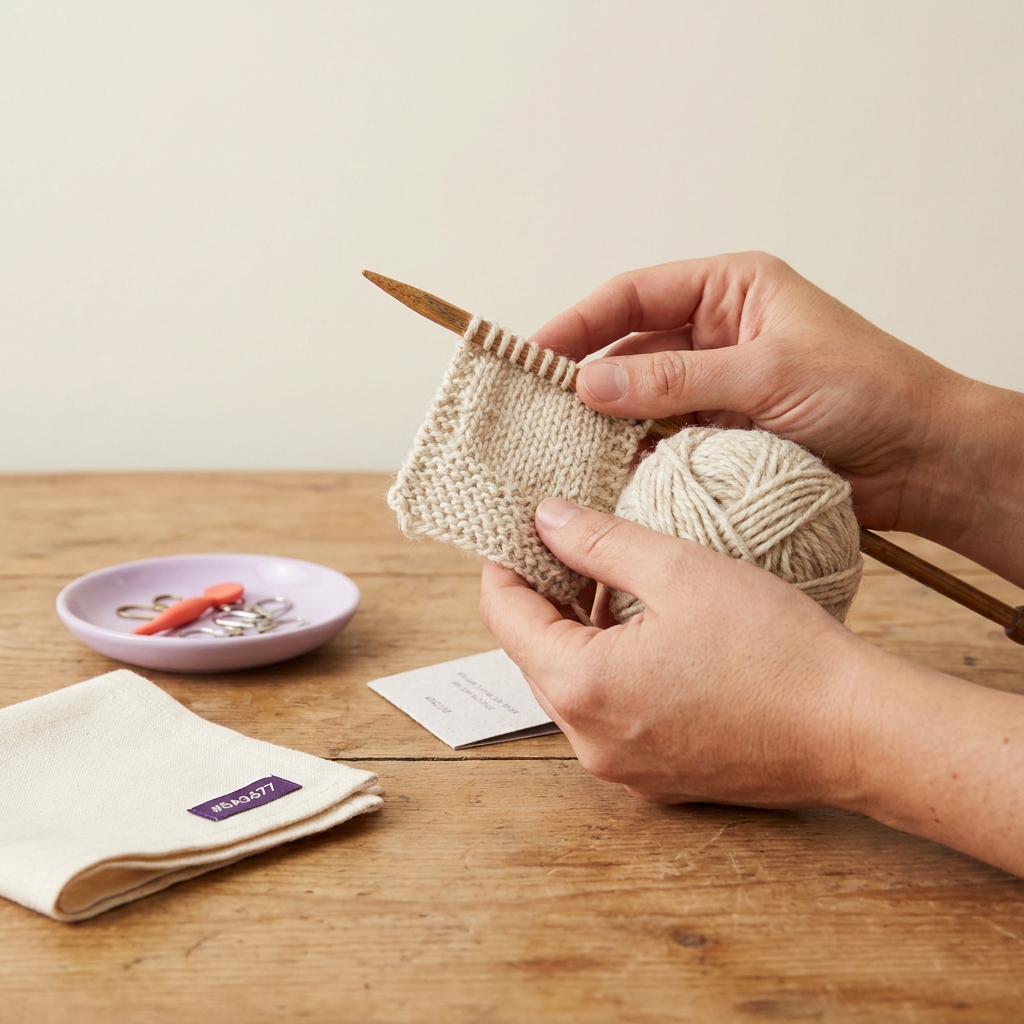
Price the actual project before buying yarn
A useful budget is yarn plus tools you still need, any paid pattern and delivery. Check the pattern’s size-specific yarn requirement and the length on each ball band. Equal ball weights do not guarantee equal yarn lengths.
Here is a clearly hypothetical calculation, not a current price quote: a project needs 600 metres, and the suitable yarn has 100 metres per ball. Round up 600 / 100 to six balls. At an assumed €4 per ball, yarn would be €24. If you also needed €5 needles and a €3 pattern, the example would total €32 before delivery. Substituting different yarn or making another size changes the calculation.
| Item | Check before paying |
|---|---|
| Yarn | Length needed for your size, length per ball, gauge and actual price |
| Needles | Pattern size and format; check tools you already own or can borrow |
| Notions | Only the markers, sewing needle or other items the project requires |
| Pattern and delivery | A suitable free pattern is an option; include any actual charges |
A gauge swatch helps you check whether a substitution suits the pattern before committing to the full project. Reusable tools can serve later projects, but buying a large set in advance is optional. A scrap-yarn lifeline can protect difficult work; it does not change the yarn quantity required by the finished design.
A simple, affordable starter path
• Pick one medium weight yarn and note the recommended needle size on the label’s gauge panel. This keeps tool purchases focused (Yarnspirations: How to Knit guide).
• Choose one pair of plastic or bamboo needles in that size. Circular needles are versatile for both flat and in-the-round projects and hold more stitches comfortably (Yarnspirations: How to Knit guide).
• Download a free beginner pattern and practice knit and purl; check the instructions and your stitch count before progressing. As skills grow, you can reuse the same tools on more projects in the same yarn weight.
Related reading on Made in Steps
- How do you use markers in knitting?
- What happens if I use bigger knitting needles, and how to choose knitting needle size
Put this into practice
Price one actual project from its yarn requirement and the tools you already own. Keep reusable equipment separate from yarn consumed by that project, then change one assumption at a time when comparing the total.
Keep your knitting budget-friendly this month
FAQ
Do I need many needle sizes to begin?
No. Your yarn label suggests a needle size and gauge; you can knit multiple beginner projects in the same weight with a single pair that matches the label (Yarnspirations: How to Knit guide).
Where can I find free patterns?
Check inside your yarn’s ball band for a free pattern and browse Yarnspirations’ collection, which is free to download without purchase (Yarnspirations: How to Knit guide; Yarnspirations FAQ).
Do I have to wind my yarn before using it?
Not necessarily. Many yarns are ready to use from the center or outside; Yarnspirations explains how to find the correct end and avoid tangles (Yarnspirations FAQ).